
Preparation plays a critical role in determining whether your effort leads to meaningful progress or repeated frustration. Many people spend hours studying, planning, or organizing their work but still fail to achieve the results they expect because they overlook small yet important preparation mistakes that quietly reduce efficiency.
When you learn how to avoid these 10 common preparation mistakes immediately, you create a structured path toward stronger focus, better time management, and more consistent outcomes in exams, job searches, professional projects, or personal development goals.
Table of Contents
Why You Should Avoid These 10 Common Preparation Mistakes Immediately
Strong preparation is not just about working harder but about working in the right direction with a clear strategy and realistic expectations. When you avoid these 10 common preparation mistakes immediately, you reduce unnecessary stress, improve your ability to retain information, and make your efforts more productive over time.
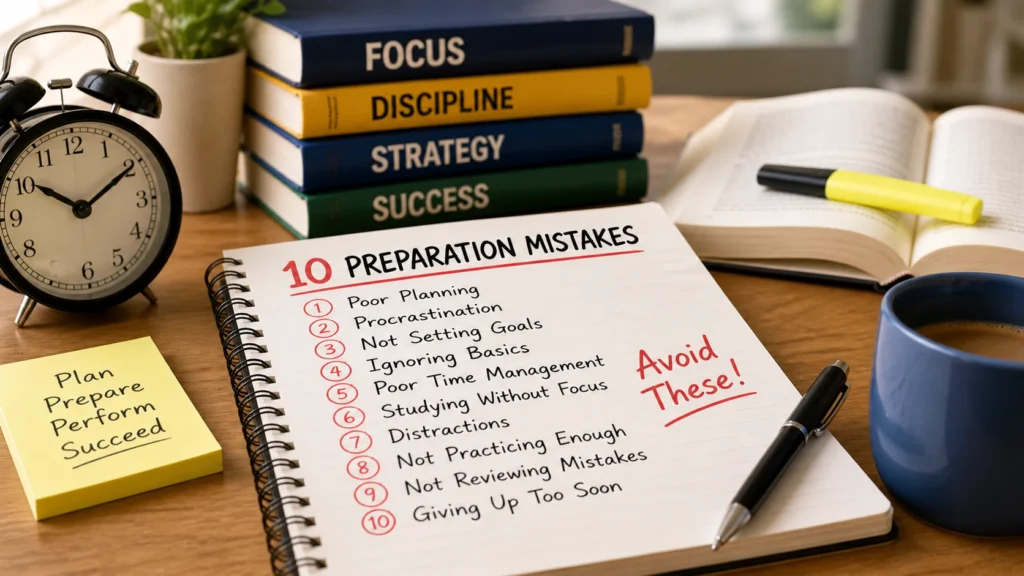
Instead of reacting to problems at the last minute, you begin to anticipate challenges early and build habits that support steady progress and long term success.
1. Starting Without a Clear Plan
One of the most common preparation mistakes people make is beginning their work without a clear structure or roadmap that defines what needs to be completed and when. Without a plan, even motivated individuals often lose direction, repeat tasks unnecessarily, or spend time on low priority activities that do not contribute to meaningful progress.
Creating a simple weekly or daily preparation outline helps organize your workload, keeps you accountable, and ensures that your effort is aligned with your goals rather than scattered across unrelated tasks.
2. Ignoring Realistic Time Management
Poor time management often leads to unfinished work, rushed learning sessions, and unnecessary anxiety as deadlines approach faster than expected.
Many people underestimate how long tasks actually take, which causes delays and discouragement later in the preparation process. Dividing your schedule into manageable time blocks and assigning realistic completion targets allows you to maintain consistency while protecting your motivation and energy throughout the entire preparation period.
3. Relying Only on Passive Learning
Passive learning methods such as reading without reflection or watching videos without interaction may feel productive in the moment but usually result in weak long term retention.
Active engagement with material through note taking, summarizing concepts in your own words, and testing your understanding improves memory and strengthens your ability to apply knowledge in real situations.
Avoiding this mistake immediately can significantly increase how effectively you learn within the same amount of study time.
4. Skipping Practice and Application
Understanding information is not the same as being able to apply it correctly when it matters most, yet many people assume reading material once or twice is enough preparation.
Practice sessions, mock exercises, and real world simulations help identify weak areas before they become serious obstacles and allow you to correct mistakes early.
Consistent application transforms theoretical knowledge into practical confidence and prepares you for real performance conditions.
5. Avoiding Feedback From Others
Preparation done entirely in isolation often hides weaknesses that could be corrected quickly with outside input from experienced mentors, peers, or professionals.
Constructive feedback provides a clearer perspective on your strengths and areas that need improvement, helping you adjust your strategy before mistakes become habits. Seeking guidance regularly ensures that your preparation remains accurate, efficient, and aligned with realistic expectations.
6. Studying Without Clear Priorities
Trying to cover everything at once may seem productive, but it usually reduces efficiency because attention becomes divided across too many topics at the same time. Identifying the most important subjects or tasks first allows you to invest your energy where it produces the greatest results.
Prioritizing effectively ensures that critical areas receive enough attention before moving on to secondary material that supports overall understanding.
7. Neglecting Breaks and Rest
Continuous preparation without adequate breaks can reduce concentration, slow comprehension, and increase mental fatigue over time, which ultimately lowers productivity rather than improving it. Short recovery periods between focused work sessions help restore attention and maintain steady performance throughout longer preparation schedules.
Balanced routines that include rest make it easier to sustain progress across days and weeks instead of relying on short bursts of effort.
8. Using Too Many Resources at Once
Access to many learning tools and materials can be helpful, but switching between too many sources often creates confusion and prevents deep understanding of any single approach. Selecting a small number of reliable resources and following them consistently helps maintain clarity and reduces unnecessary distractions.
A focused resource strategy allows you to build stronger knowledge without repeating the same topics in different formats.
9. Waiting Until the Last Minute to Review
Leaving revision until the final stage of preparation increases stress levels and reduces confidence because there is little time left to correct mistakes or reinforce weak areas.
Regular review sessions spaced throughout your preparation timeline improve retention and make it easier to recall information when needed. Early and repeated revision also strengthens familiarity with key concepts and prevents last minute overload.
10. Ignoring Progress Tracking
Without tracking progress, it becomes difficult to evaluate whether your preparation strategy is effective or whether adjustments are needed to improve results.
Monitoring completed tasks, reviewing performance trends, and updating your schedule when necessary helps maintain direction and motivation throughout the preparation process. Progress tracking provides clear evidence of improvement and encourages consistency even during challenging phases.
Practical Strategies to Avoid Preparation Mistakes Immediately
Applying simple but structured habits can make preparation more efficient and reduce the likelihood of repeating the same mistakes in future learning or planning situations.
Setting measurable weekly goals, reviewing completed tasks regularly, limiting distractions during focused work sessions, and selecting dependable learning resources all contribute to a preparation routine that supports steady improvement over time.
These strategies strengthen discipline while ensuring that your effort produces meaningful and visible results.
Final Thoughts
Preparation becomes significantly more effective when you recognize the habits that slow progress and replace them with structured routines that support consistency and clarity.
By choosing to avoid these 10 common preparation mistakes immediately, you position yourself for stronger performance, better confidence, and more reliable outcomes in any academic, professional, or personal goal you decide to pursue. Small adjustments made early in the preparation process often lead to the greatest long term improvements.
Frequently Asked Questions
What is the most common preparation mistake people make?
One of the most common preparation mistakes is starting without a clear plan. Without defined goals and structure, it becomes difficult to track progress and prioritize important tasks effectively.
How can better time management improve preparation?
Better time management allows you to divide tasks into manageable steps, maintain consistency, and avoid last-minute pressure. It also improves focus and helps you complete preparation more efficiently.
Does passive learning reduce preparation effectiveness?
Yes, passive learning such as only reading or watching material without interaction reduces retention. Active learning techniques like note-taking, self-testing, and reviewing concepts improve understanding and memory.
How often should I review my preparation progress?
You should review your preparation progress at least once a week. Regular tracking helps identify weak areas early and allows you to adjust your strategy before problems grow larger.
What is the fastest way to improve preparation habits?
The fastest way to improve preparation habits is to create a simple plan, prioritize important tasks, schedule regular reviews, and remove distractions during focused work sessions.