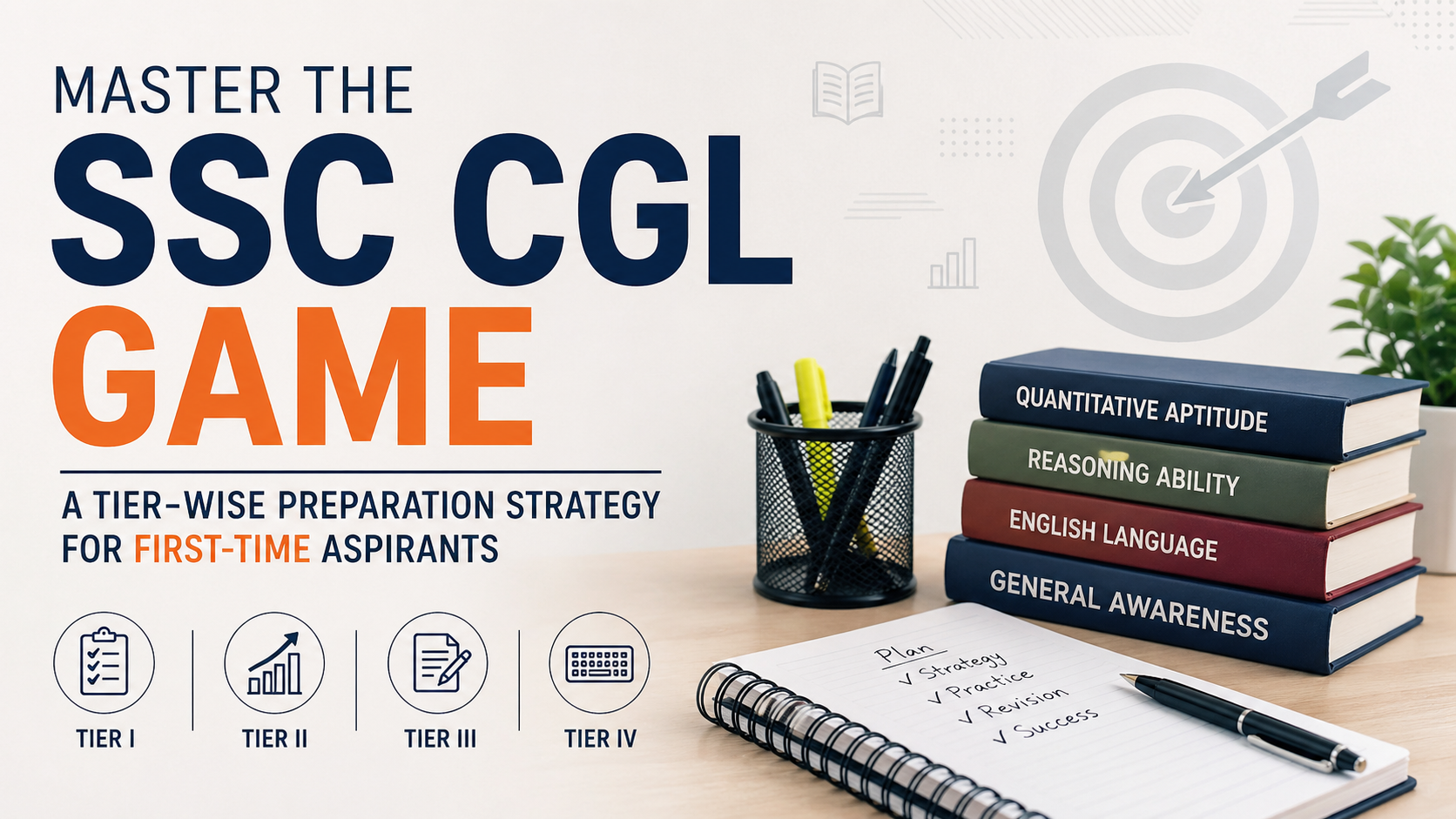
When I first decided to prepare for SSC CGL, the biggest mistake I made was treating the exam like a single challenge instead of understanding that it is actually four different stages testing four different versions of me. Once I started preparing tier-wise instead of randomly covering subjects, my preparation finally began to feel structured and manageable. That shift alone changed how confidently I approached the exam.
In the beginning, Tier I looked overwhelming because every subject seemed equally important. I tried studying everything every day and ended up feeling like I wasn’t improving in anything. After a couple of weeks, I realized Tier I is really about building speed, accuracy, and familiarity with questions rather than mastering depth. So I stopped chasing perfection and focused instead on consistency. I started solving short Quant topic sets daily, practicing reasoning patterns repeatedly, and reading English passages even when I didn’t fully understand them at first. Within a month, I noticed that questions that once looked complicated started feeling predictable. That was the first sign I was moving in the right direction.
Also Read: SSC 2026 Strategy: Crack Tier-1 in Just 60 Days
One thing that helped me early was treating mock tests as learning tools rather than judgment tools. Initially, my scores were low, and it felt discouraging, but I began reviewing each mock carefully. I paid attention not just to wrong answers but also to the questions I solved slowly. Over time, I realized improvement in SSC CGL is less about intelligence and more about pattern recognition. Once my brain started recognizing question formats quickly, my speed improved naturally.
When I shifted attention to Tier II preparation, I understood that this stage demands seriousness in a completely different way. Tier I rewards familiarity, but Tier II rewards discipline. Quantitative Aptitude suddenly became deeper and less forgiving. I remember spending days struggling with algebra and advanced arithmetic until I accepted that repetition was the only solution. Instead of switching topics whenever I got stuck, I stayed with one topic until it became comfortable. That patience changed everything for me.
English in Tier II also surprised me. Earlier I assumed basic grammar knowledge would be enough, but I realized comprehension and vocabulary consistency mattered more than memorizing rules. I started reading editorials daily, even when I understood only half of them. Slowly, sentence structures began making more sense, and error detection questions stopped feeling like guesswork. That daily reading habit became one of the most useful changes in my routine.
Another adjustment I made during Tier II preparation was tracking mistakes instead of tracking hours. Earlier I used to feel satisfied after long study sessions, but later I started maintaining a small notebook of repeated errors. Whenever I made the same mistake twice, I treated it seriously. That simple habit helped me avoid losing marks in areas I had already studied.
Preparing for Tier III felt different from the earlier stages because it required expression rather than selection. Writing essays and letters was something I had ignored at first, assuming it could be managed later. But once I attempted a few practice essays, I realized writing clearly under time pressure is not automatic. I started practicing short essays every few days and focused on organizing ideas logically instead of trying to sound impressive. Over time, I noticed my thoughts became easier to structure, and writing stopped feeling stressful.
One realization that helped me during Tier III preparation was that clarity matters more than complexity. I stopped trying to use difficult words unnecessarily and instead focused on writing sentences that were simple and direct. That change made my answers more readable and easier to complete within the time limit. It also reduced hesitation while writing.
Related: Write a High-Scoring SSC Essay Even If Your English Is Average
When I began preparing for Tier IV, I initially underestimated its importance. I thought typing and document tasks would be easy to manage later, but I quickly realized speed tests require practice just like any other section. I started practicing typing daily for a short time instead of postponing it. Within a few weeks, my typing became smoother, and I felt more confident about clearing this stage without stress.
Looking back, the biggest improvement in my preparation came when I stopped comparing my progress with others. In the early days, seeing other aspirants complete multiple subjects quickly made me feel slow. But once I focused only on my own routine, I noticed steady improvement. SSC CGL preparation became easier when I accepted that consistency beats intensity in the long run.
I also learned that revision plays a bigger role than studying new topics. Whenever I revised regularly, my confidence improved. Whenever I skipped revision, even familiar topics started feeling unfamiliar again. That experience taught me to respect revision as part of preparation rather than something optional.
Another change that helped me stay motivated was breaking preparation into smaller weekly goals instead of thinking about the entire syllabus at once. Completing small targets gave me a sense of progress and made the journey less stressful. It also helped me stay disciplined during days when motivation was low.
If I could restart my SSC CGL preparation from the beginning, I would focus earlier on mock analysis, consistent revision, and tier-wise planning instead of trying to study everything together. Once I understood how each tier tests a different skill set, preparation stopped feeling confusing and started feeling purposeful. That clarity made the process less overwhelming and much more achievable.
Even now, I believe the real key to mastering SSC CGL is not studying harder than everyone else but studying smarter every day. Small improvements in speed, accuracy, writing clarity, and consistency add up faster than most aspirants expect. Once I trusted that process and stayed patient with it, the exam stopped feeling like an impossible challenge and started feeling like something I could actually handle step by step.